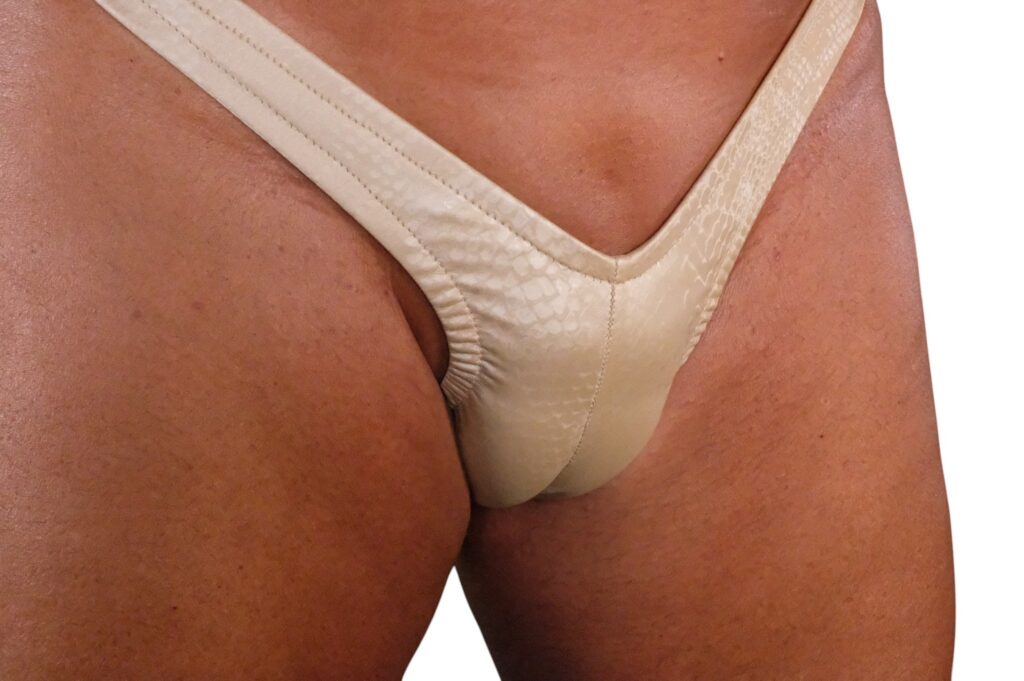
Why Men Are Selecting Gender-Fluid Swimsuits
Men’s swimwear is going through a remarkable period of experimentation. For generations, the choices presented to most men were fairly predictable: trunks, board shorts, swim briefs, and perhaps a traditional bikini. Today, those boundaries are expanding rapidly.
One of the most interesting developments is gender-fluid swimwear—designs that don’t necessarily attempt to look traditionally masculine or traditionally feminine.
For some men, gender-fluid swimwear simply means wearing a swimsuit they love without caring whether somebody originally considered the style “for men” or “for women.” For others, it provides an opportunity to explore a softer, more feminine, androgynous, or gender-neutral appearance. And for some transfeminine, nonbinary, gender-questioning, or gender-nonconforming people, swimwear can become part of a much broader exploration of gender presentation.
The important point is that these motivations aren’t all the same.
A man can wear a feminine bikini without identifying as a woman. A straight man can wear a gender-fluid swimsuit without changing his sexual orientation. Someone else may use exactly the same swimsuit as part of a meaningful exploration of gender identity.
The swimsuit doesn’t have to define the wearer. It gives the wearer another way to define their own presentation.
What Is a Gender-Fluid Swimsuit?
There isn’t one universally accepted definition.
In the broadest fashion sense, gender-fluid swimwear breaks away from the assumption that certain cuts, colors, coverage levels, or silhouettes must belong exclusively to men or women.
That can include:
- Bikini briefs and high-cut bikinis
- Thongs and G-strings
- Micro and ultra-micro swimsuits
- Gender-neutral designs
- Feminine-cut bottoms adapted to male anatomy
- Flat-front swimsuits
- Tucking-compatible swimwear
- MTF-inspired designs
- Contoured pouch swimsuits
- Minimal or pouch-only designs
- Androgynous swimwear
- Feminine colors, prints, straps, and detailing
- Swimsuits designed to create different body silhouettes
The category can therefore stretch from slightly feminine men’s bikinis all the way to specialized designs intended to produce a strongly feminized appearance.
That enormous range is part of its attraction.
Men Have More Freedom to Experiment
One of the biggest reasons men are selecting gender-fluid swimsuits is simple: they finally have more choices.
Traditional men’s swimwear offered relatively little variation compared with women’s swimwear.
Walk through the women’s swimwear department and you’ll find bikinis, Brazilian bottoms, cheeky cuts, thongs, high-waisted designs, high-leg styles, string bikinis, micros, one-pieces and dozens of variations.
Historically, men often got shorts.
That distinction is becoming harder to justify.
A growing number of men are asking why they shouldn’t have access to the same degree of fashion experimentation.
Gender-fluid swimwear provides an answer.
A Swimsuit Doesn’t Determine Your Gender
This distinction is essential.
Clothing can express gender, but clothing does not automatically determine gender identity.
A masculine man can wear a feminine bikini.
A feminine man can wear board shorts.
A nonbinary person can wear either.
A trans woman can choose a swimsuit specifically designed to create a more traditionally feminine silhouette.
None of those choices requires everyone wearing the same garment to identify the same way.
That’s one reason gender-fluid fashion has become so interesting: the wearer gets to decide what the garment means to them.
Some Men Simply Prefer Feminine Fashion
There is also a straightforward fashion explanation.
Some men think women’s swimwear looks better.
They may like narrower sides, higher-cut legs, smaller fronts, cheekier backs, bright colors, delicate straps, or the overall proportions of a bikini traditionally marketed toward women.
The problem has historically been fit.
A bikini designed around typical female anatomy may not provide the space, support, or coverage that someone with male anatomy wants.
Gender-fluid swimwear can bridge that gap.
Designers can borrow the visual language of women’s swimwear while altering the pattern to accommodate different anatomy.
The result can look feminine without requiring the wearer to struggle with a swimsuit that wasn’t designed for their body.
Some Men Want an Androgynous Look
Not everyone wants to move completely from masculine presentation to feminine presentation.
Many people enjoy the space between them.
A gender-fluid swimsuit might combine a traditionally masculine front with very narrow feminine side straps. Another might use a relatively neutral front and a Brazilian or thong back. Another could eliminate obvious anatomical emphasis altogether.
That allows someone to create an intentionally ambiguous appearance.
For some wearers, that’s exactly the goal.
They don’t necessarily want their swimsuit announcing “male” or “female.”
They simply want it to look like them.
Gender-Fluid Swimwear Can Reduce the Traditional Male Bulge
Traditional men’s swimwear frequently emphasizes male anatomy.
Contoured pouches can project forward, and some designs are intentionally engineered to enhance the appearance of the bulge.
Gender-fluid swimwear can move in exactly the opposite direction.
Some wearers prefer a smoother, flatter front.
That might be accomplished through compression, appropriate lining, supportive construction, tucking-compatible designs, or specialized garments intended to minimize the prominence of external anatomy.
The goal doesn’t necessarily have to be complete feminization.
Sometimes the wearer simply doesn’t want the crotch to be the visual center of the swimsuit.
MTF Swimwear Takes the Concept Further
MTF-oriented swimwear occupies a more specialized part of the gender-fluid spectrum.
These swimsuits are intended for people who want a distinctly feminine presentation despite having external male genital anatomy.
Depending on the design, they may use compression, tucking support, shaping panels, strategic seams, specialized front construction, or other garment-engineering techniques to produce a smoother silhouette.
For some pre-op or non-op trans women, that can be particularly valuable.
Swimming and beachwear can be challenging because ordinary clothing provides many opportunities to control a silhouette while a tiny swimsuit provides almost nowhere to hide.
A well-designed swimsuit can therefore do more than look attractive. It can help the wearer’s outward presentation better match how they want to be seen.
Tucking Swimwear Has Become an Important Category
Tucking-compatible swimsuits are another reason gender-fluid designs matter.
Traditional tucking involves positioning external genital anatomy so the front profile appears flatter. Because bodies differ, not every person can or wants to tuck in the same way, and anything painful, numb, discolored, or excessively restrictive should be stopped.
Purpose-designed swimwear can make the process easier by providing appropriate compression and support.
For someone who wants a feminine bikini appearance, that can dramatically change the visual effect.
Instead of wearing a women’s bikini that wasn’t designed for their anatomy, the wearer can choose something engineered specifically for the presentation they’re trying to achieve.
Other Men Don’t Want to Hide Their Anatomy at All
Interestingly, gender-fluid fashion can travel in the opposite direction too.
One person wants a completely smooth front.
Another wants an anatomical pouch.
Both can reject conventional ideas about what men’s swimwear is supposed to look like.
That is why gender-fluid shouldn’t automatically be interpreted as meaning “feminizing.”
It can also mean refusing the traditional categories entirely.
A man might wear a tiny feminine-looking thong with an anatomically shaped pouch. The rear says women’s micro bikini; the front unmistakably accommodates male anatomy.
That contradiction can be the whole point.
The Bikini Is Becoming Increasingly Unisex
The bikini provides perhaps the clearest example of how arbitrary some clothing categories can become.
At its most basic, a bikini bottom is simply a small garment covering the pelvis and usually some portion of the buttocks.
Change the proportions and construction to accommodate different anatomy and there is little practical reason the basic concept must belong exclusively to women.
Men have already been wearing bikini-style swim briefs for decades.
Gender-fluid fashion simply pushes the concept further by borrowing more openly from traditionally feminine bikini design.
Narrower sides.
Higher legs.
Smaller backs.
String construction.
Brazilian cuts.
Micro proportions.
Once those elements are combined with construction appropriate for the wearer’s anatomy, the distinction between “men’s bikini” and “women’s bikini” can become increasingly blurry.
Thongs and G-Strings Naturally Cross Gender Boundaries
Thongs and G-strings are particularly well suited to gender-fluid fashion because the basic architecture is already similar across men’s and women’s designs.
There isn’t much fabric to begin with.
The major difference is often the front.
Designers can therefore create versions with anatomical pouches, flatter compression fronts, tucking fronts, neutral fronts, or strongly feminine silhouettes.
The same basic thong concept can serve completely different presentations.
That’s gender-fluid design in action.
Micro Swimwear Makes the Differences Even Smaller
As swimsuits become smaller, traditional gender distinctions can become less obvious.
An ultra-micro swimsuit may consist of little more than a small front panel and narrow straps.
At that point, construction and styling matter more than the old men’s-versus-women’s categories.
A micro can be masculine.
It can be feminine.
It can be androgynous.
It can intentionally emphasize anatomy.
It can intentionally minimize anatomy.
It can sit somewhere between all of those ideas.
That flexibility makes micro swimwear particularly interesting for people exploring gender-fluid fashion.
Straight Men Can Enjoy Gender-Fluid Swimwear Too
Gender-fluid fashion shouldn’t be confused with sexual orientation.
A straight man can enjoy wearing feminine or androgynous swimwear while remaining attracted to women.
A gay man can prefer extremely masculine swimwear.
A bisexual man might enjoy both masculine and feminine presentations.
Sexual orientation describes attraction. Gender identity concerns one’s relationship to gender. Gender expression concerns how someone presents themselves.
Those concepts can interact, but they aren’t interchangeable.
This parallels the broader change already occurring in men’s swimwear, where bikinis, thongs, micros, and other once heavily categorized styles increasingly cross boundaries between gay, straight, and bisexual fashion.
Some Men Enjoy Feminization
For another group, feminization is precisely the attraction.
They may enjoy seeing themselves with a more feminine silhouette.
That might begin with something subtle: a bikini with narrower sides or a more feminine color.
Then perhaps a thong.
Then a flat-front design.
Some may eventually explore tucking swimwear, MTF-oriented designs, feminine tops, breast forms, makeup, longer hairstyles, or complete feminine presentation.
For some people this remains fashion or fantasy.
For others it becomes part of understanding a deeper gender identity.
There doesn’t need to be a predetermined destination.
Gender Exploration Doesn’t Require an Immediate Label
This is another reason clothing can be useful.
Someone can experiment.
A person who has spent a lifetime wearing conventional men’s clothing might wonder what they would look like in a feminine bikini.
Trying one doesn’t require immediately deciding:
“I’m transgender.”
“I’m nonbinary.”
“I’m gender-fluid.”
“I’m a crossdresser.”
“I’m a feminine man.”
The person can simply try the swimsuit.
Maybe they love it.
Maybe they don’t.
Maybe they discover that they enjoy feminine fashion but still feel completely comfortable identifying as male.
Maybe it opens questions about gender they hadn’t previously explored.
Clothing provides a relatively accessible way to learn something about yourself without requiring an immediate permanent decision.
Couples Can Explore Gender-Fluid Fashion Together
Partners can also play an important role.
A girlfriend or wife may discover that she loves seeing her male partner in a tiny bikini, thong, or more feminine swimsuit.
They might shop together and experiment with different cuts.
Perhaps she chooses his first women’s-inspired bikini.
Perhaps eventually they wear similar styles.
For couples who enjoy fashion experimentation, traditional rules can become something playful rather than restrictive.
He doesn’t have to wear the big swimsuit simply because he’s the man.
She doesn’t automatically have to wear the smaller one.
Sometimes he may be wearing the tiniest bikini on the beach.
Body Confidence Is Part of the Appeal
Minimal and gender-fluid swimwear can also be an exercise in body confidence.
The first time someone wears an unconventional swimsuit publicly, they may feel intensely self-conscious.
They notice every person around them.
After repeated experiences, that anxiety can diminish.
They begin realizing that a swimsuit doesn’t have to satisfy everybody else’s expectations.
That can be liberating.
The previous discussion of men’s increasingly minimal swimwear makes the same point: repeated experience can turn something that initially feels daring into simply another swimsuit in the wearer’s wardrobe.
Social Media Has Made Gender-Fluid Fashion Visible
People now see fashion from around the world every day.
Someone who previously saw only conventional American men’s trunks can instantly encounter European briefs, Brazilian bikinis, Asian fashion, queer swimwear, transgender swimwear, men’s thongs, micro designs, gender-neutral collections, and experimental independent designers.
That exposure matters.
The first time a man sees another man wearing a feminine bikini, it may look unusual.
After seeing hundreds of examples, it begins looking like another fashion option.
Visibility creates familiarity.
Familiarity makes experimentation easier.
Vacation Can Be the Perfect Place to Experiment
As with micro and thong swimwear, vacations can provide an opportunity to experiment with gender-fluid presentation.
Someone may feel uncomfortable debuting a feminine bikini at the community pool where everyone knows them.
A vacation is different.
A resort, cruise, beach destination, or private pool can feel like a fresh environment.
The wearer can try a different presentation and discover how it actually feels rather than endlessly wondering about it.
Of course, local rules and venue dress codes still matter, particularly with extremely minimal or sheer designs.
But where the swimsuit provides the required coverage, the wearer may discover that the biggest obstacle was their own nervousness.
Men’s Swimwear Is Becoming Less About Rules
This may ultimately explain the entire trend.
Men are getting tired of unnecessary fashion rules.
Why does a man have to wear shorts?
Why can’t he wear a bikini?
Why can’t the bikini have feminine straps?
Why can’t he wear pink?
Why can’t he wear a thong?
Why can’t he choose a swimsuit that creates a flatter front?
Why can’t he choose an MTF-inspired swimsuit?
Why can’t he alternate between masculine and feminine styles depending on his mood?
There isn’t one answer that applies to every wearer.
And that’s precisely the point.
Gender-Fluid Swimwear Is About Choice
The growth of gender-fluid swimwear isn’t simply about men becoming more feminine.
It’s about increasing the number of choices available to everyone.
One man may want a masculine anatomical pouch.
Another wants an androgynous bikini.
Another wants a flat front.
Another wants a strongly feminine MTF silhouette.
Another wants a tiny thong that combines traditionally masculine and feminine elements.
Another simply sees a swimsuit he thinks looks fantastic and doesn’t care what category somebody placed it in.
All of them are participating in the same larger change.
The Future May Simply Be Swimwear
Eventually, “men’s swimwear” and “women’s swimwear” may become less rigid categories for certain styles.
Bodies still differ, so garment engineering and fit will continue to matter. A swimsuit needs to accommodate the wearer’s anatomy and intended activity comfortably and securely.
But the aesthetics don’t have to follow those anatomical differences.
A swimsuit engineered for male anatomy can look traditionally feminine.
A tucking swimsuit can create a smoother appearance.
A thong can be masculine, feminine, or neither.
A bikini can simply be a bikini.
The same cultural shift has already begun weakening older assumptions that particular swimsuits automatically communicate someone’s sexual orientation.
Gender-fluid swimwear takes that freedom another step.
It asks men to stop beginning with:
“Is this swimsuit for men?”
And instead ask:
“Is this the swimsuit I want to wear?”
For a growing number of people, that is becoming the only question that really matters.